Amazon / Weather / WEATHERBUG
REVIEW
WeatherBug on Fire TV is the community-radar app the category quietly needs.
GroundTruth's weather app is built on a network of more than 10,000 community-sourced weather stations. On Fire TV, the hyperlocal angle is the differentiator the rest of the category doesn't have.
BY THE APP COMRADE DESK · MAY 9, 2026 · 3 MIN READ
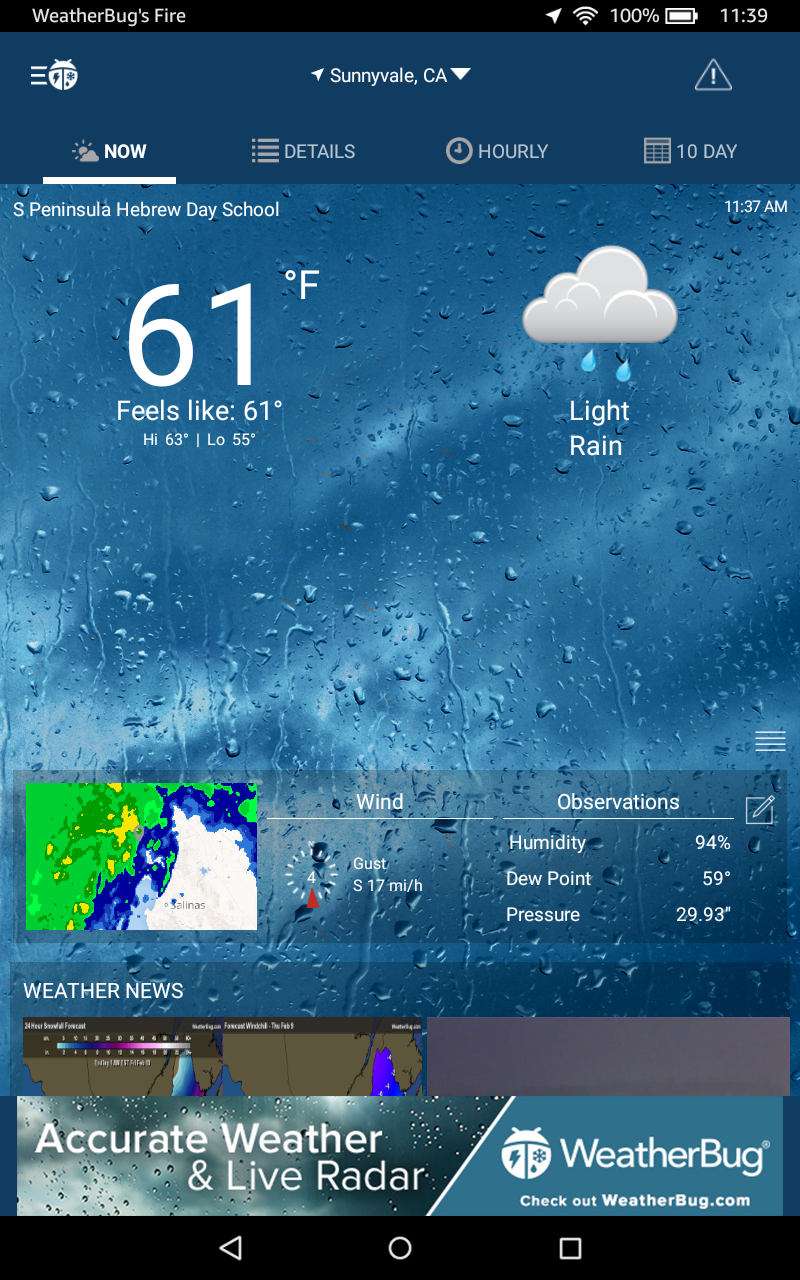
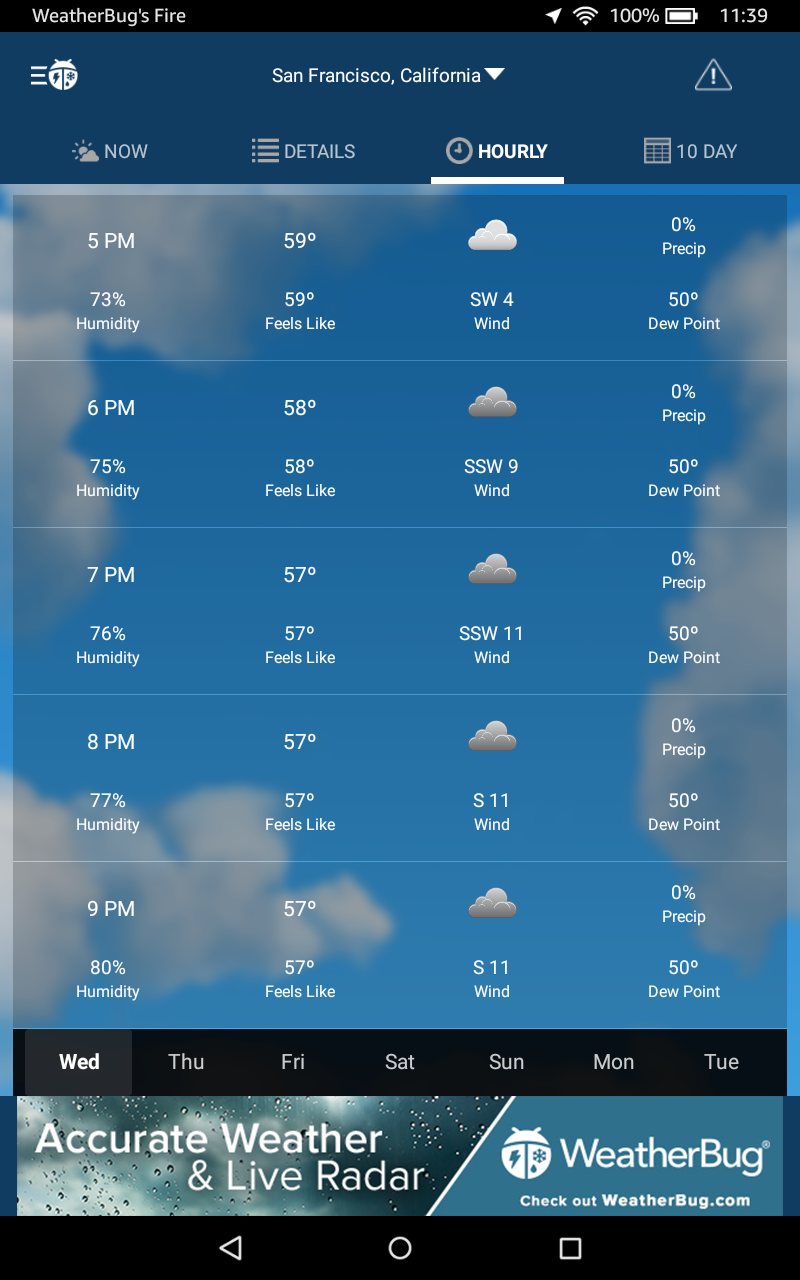
The weather-app category is, as a product space, almost fully converged. Current temperature, hourly forecast, 10-day outlook, radar, severe-weather alerts. Every app in the category does the same things; the only meaningful product question is where the underlying data comes from. WeatherBug’s answer is the one that’s structurally hardest for competitors to copy: a 10,000-station community network that has been accreting since the early 2000s, providing sub-mile-resolution current-conditions data in the neighbourhoods where it’s dense.
For the household that wants weather displayed on the kitchen TV, WeatherBug on Fire TV is a viable install — the radar is competent, the alerts work, the multi-location switching handles the family-in-different-states case. The Backyard network is the differentiator that makes the product genuinely interesting where coverage exists, and the app surfaces that data without making the user understand the infrastructure.
The trade-off is ad-supported with no paid escape. Banner ads on a weather app feel out of place at TV viewing distance, and the lack of an Elite tier on the Fire TV build is the structural complaint that follows the install. The Weather Channel app reviewed elsewhere has the same complaint with a more polished visual layer; WeatherBug wins on data depth and loses on UI freshness. For the right household, that trade is worth making.
WeatherBug's edge is the 10,000-station community network. On a TV, that data depth has room to breathe.
FEATURES
WeatherBug on the Amazon Appstore is the Fire TV / Fire Tablet build of GroundTruth's long-running weather app. (xAD, Inc. is GroundTruth's legal name; the consumer brand is WeatherBug.) The app provides location-based current conditions, hourly and 10-day forecasts, animated radar with multiple overlays (precipitation, satellite, temperature, wind), severe-weather alerts, and pollen / air-quality data.
The platform's specific differentiator is the WeatherBug Backyard network — a community of more than 10,000 personal weather stations that feed real-time temperature, humidity, wind, and precipitation data into the app's hyperlocal layer. For users in covered neighbourhoods, current-conditions data comes from a station blocks away rather than from the regional airport miles distant.
Free, ad-supported. Banner ads on most surfaces, occasional interstitials between deeper navigation paths. There is no paid tier on the Fire TV build to remove ads — the ad-supported model is the only model on Amazon's platform.
Fire-TV-specific features: D-pad-friendly radar navigation, voice search via Alexa for location lookup ("Alexa, weather in Austin"), multiple saved-location switching, and severe-weather alert overlays that surface on the Fire TV home screen via the platform's notification model.
MISSION ACCOMPLISHED
Hyperlocal data depth is the achievement. The 10,000-station Backyard network is genuinely differentiated infrastructure — most weather apps draw from NWS forecast points and airport METAR feeds, which leaves gaps in suburban and exurban coverage. WeatherBug's community stations fill those gaps with sub-mile resolution in covered areas. Users in WeatherBug-dense neighbourhoods see current conditions from their own block.
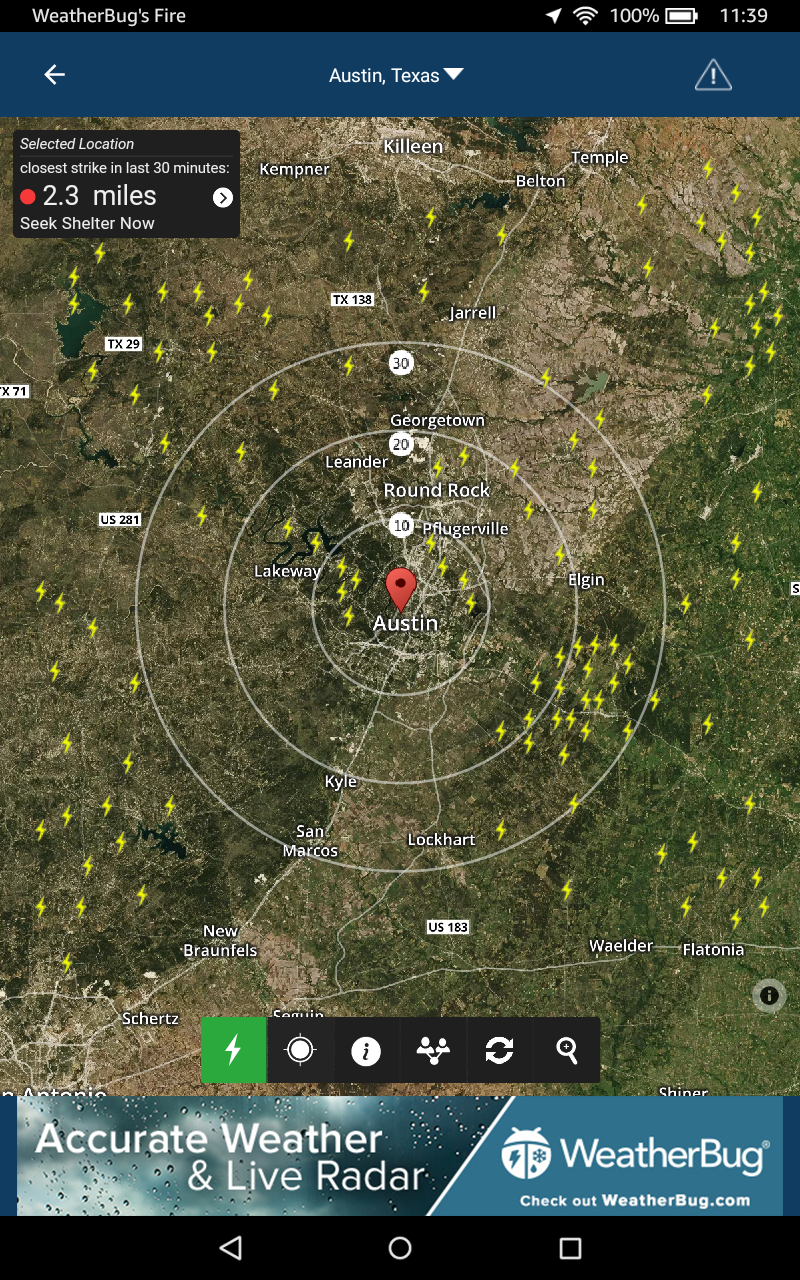
The radar implementation is competent. The animated loop is smooth on Fire TV Stick 4K Max hardware, the overlays (precipitation, lightning strike data, satellite cloud) are well-tuned for TV viewing distance, and the Spark feature (real-time lightning strike mapping) is the kind of detail weather enthusiasts notice. For households that watch storms come in, this is the radar surface that shows them earliest.
Multi-location switching works. The household-with-relatives-in-different-states use case is well-served, and the saved-locations list survives reboots correctly. Severe-weather alerts can be configured per-location, which is the right behaviour for users tracking weather in places they don't live.
ROOM TO IMPROVE
Ad density on the Fire TV build is high enough to be noticed. Banner ads on a weather app at TV viewing distance feel out of place — the user is checking radar to make a quick decision about the next hour, and an interstitial in that flow is friction the use case doesn't tolerate. The phone version of WeatherBug offers a paid Elite tier; the Fire TV build does not, which is the structural complaint.
UI design lags the iOS / Android refreshes. The Fire TV implementation looks several years behind the modern weather-app aesthetic the phone apps have moved toward — typography is dated, the colour palette reads as generic blue-app, and the information hierarchy is denser than it needs to be on a 65-inch screen.
The community-station network is geographically uneven. Suburban US coverage is excellent; rural areas, urban cores, and most international markets see far thinner station density, at which point WeatherBug's hyperlocal advantage collapses to "the same NWS data every other app uses".
GroundTruth's adtech business — location-based advertising informed by app users' geo-data — is the company's primary revenue source. The privacy posture is what most location-aware free apps offer; users sensitive to location-data sharing should review the disclosures before installing.
CONCLUSION
Install WeatherBug on Fire TV if you live in a US suburban area where the Backyard station network is dense, want hyperlocal current-conditions data on a TV, and accept ad-supported as the only tier. The Weather Channel app on Fire TV is the closest competitor and is similarly ad-heavy but better-designed visually; WeatherBug wins on data depth where the community network is present. For users outside dense-coverage areas, either app does the job and the choice is mostly aesthetic. The phone app is the right primary surface for everyone; the Fire TV install is a complementary household-screen weather glance.