Amazon / Kids / TOCA BOCA WORLD
REVIEW
Toca Boca World gives Fire tablets the rare kids' app that respects them.
The hub that absorbed every Toca Life town is still the most generous open-ended sandbox a child can hand a parent without flinching — provided you understand what's free and what isn't.
BY THE APP COMRADE DESK · MAY 10, 2026 · 5 MIN READ

Toca Boca World is the app that quietly swallowed every other Toca Life title — School, City, Vacation, Hospital, Pets — and rolled them into a single sprawling hub. On a Fire tablet, that consolidation matters more than it does elsewhere. Amazon’s appstore has never been kind to kids’ titles, and Toca Boca World is one of the few high-craft children’s apps that ships, updates, and runs cleanly on the platform Spin Master now owns.
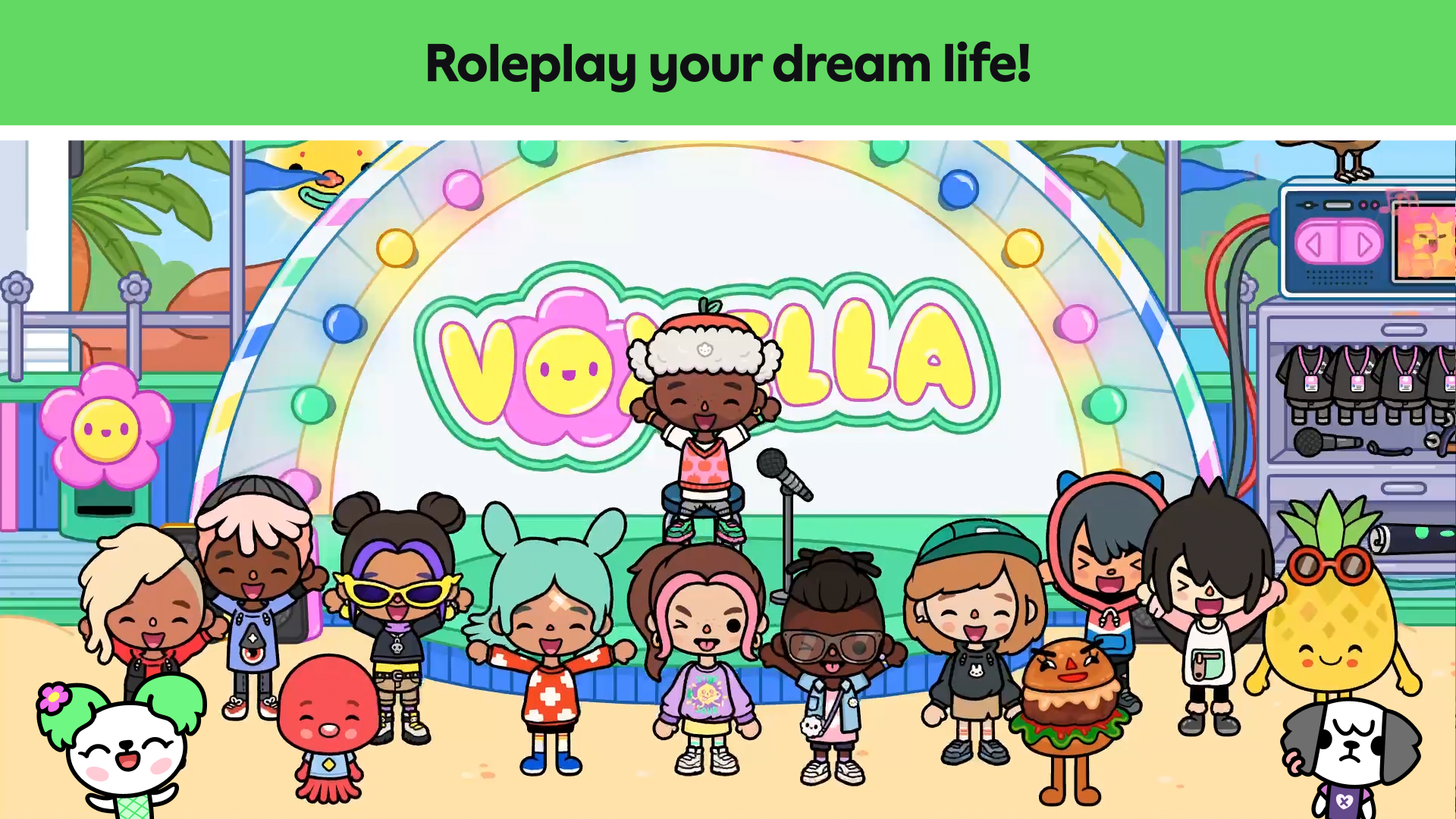
The premise hasn’t changed in years and doesn’t need to. There are no win states, no countdown timers, no leaderboards, no scores. A child picks a character, walks them through a connected map of locations, and makes things happen. A grocery store becomes a restaurant. A hospital becomes a haunted house. The grammar of play is whatever the player decides it is.
What’s worth saying out loud, especially for parents shopping the Fire ecosystem, is that this is the rare children’s app that doesn’t bait kids into the cash register every thirty seconds. The compromises are real, but so is the design philosophy, and on a $90 tablet that’s a meaningful thing.
features: | The free download includes a starter set of locations, characters, and outfits — enough for hours of play before any wallet conversation happens. Everything else expands through one-time location packs or a subscription that unlocks the full catalogue. Recent additions visible in the May 2026 build include OK Street High (now free for everyone), Riverside Street Market, a Pusheen furniture pack, and the Hospital location, which Toca Boca moved into the free tier this year.
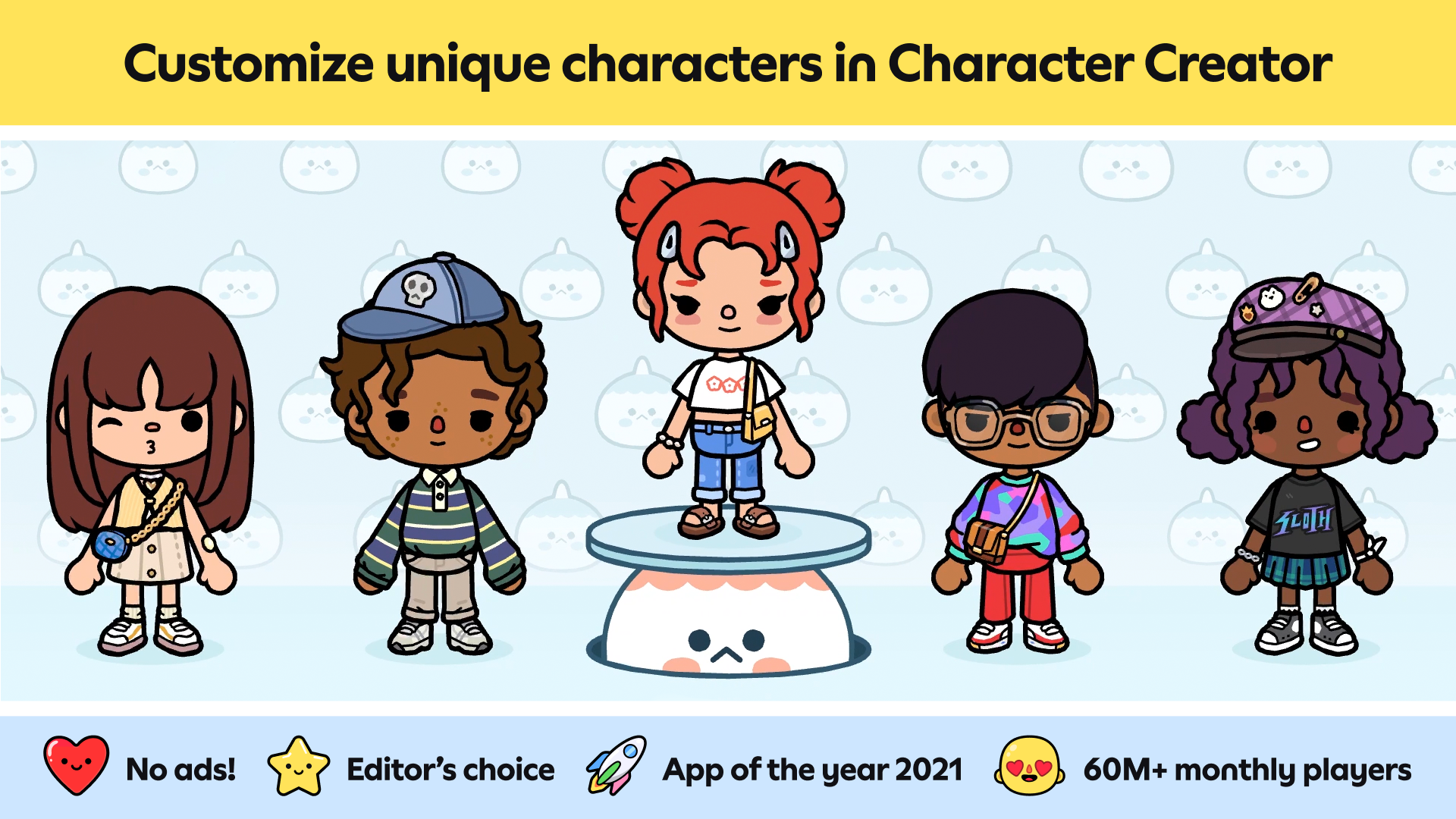
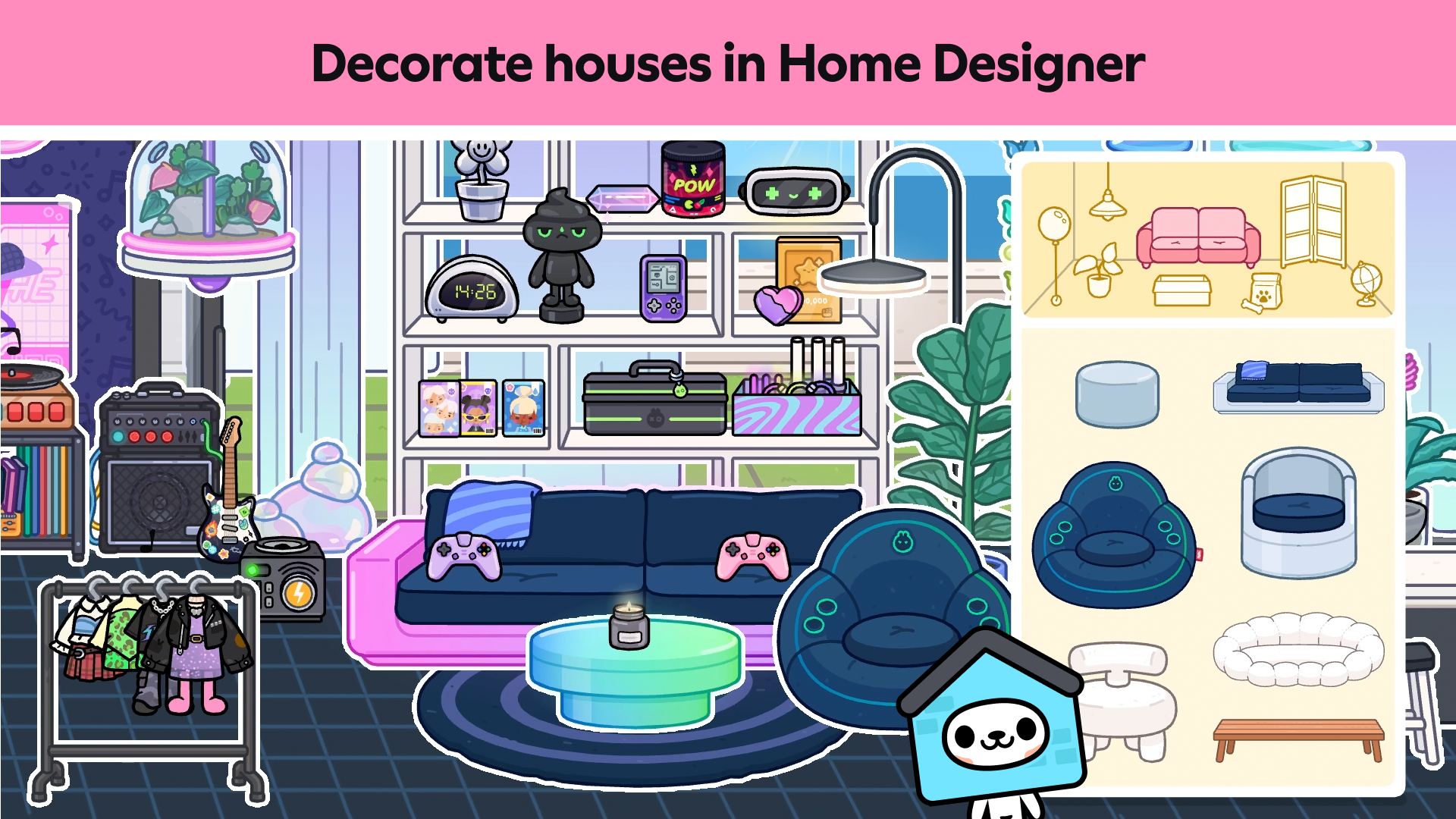
The Character Creator lets kids build people from a library of skin tones, hairstyles, body shapes, and clothing — the 2026 update added earrings, expanded the wardrobe past a hundred new items, and bumped saved-outfit slots to fifteen. The Home Designer is the other anchor: any house can be redecorated room by room with furniture the child has unlocked or bought. A Friday gift drop adds a small free item every week, which is the closest the app gets to a “log in daily” hook and is deliberately low-stakes.
Toca Boca runs no third-party ads inside the app and is COPPA-compliant. Cross-promotion exists for other Toca Boca titles but lives behind a parental gate.
missionAccomplished: | The IAP architecture, while extensive, is unusually transparent for the genre. Every paid location is gated behind an adult-verification screen that asks for a multi-digit math problem before the purchase flow opens. There is no energy meter, no timer that runs down, no pop-up nagging a child to spend gems. A kid who never buys a single expansion still gets a coherent, replayable game.
The Fire tablet build is also stable in a way Amazon Appstore titles often aren’t. The April-May 1.92 update for Fire ships close behind the Google Play release, and on a current-gen Fire HD 10 the world loads without the long stalls older Toca Life apps had on lower-end Android.
roomToImprove: | The catalogue is enormous and the pricing model is the honest weak spot. Individual location packs run a few dollars each, bundles climb into the $50 range, and the all-access subscription sits around $8 a month — a lot of surface area for a parent to navigate, and the free starter set, while generous, makes the locked locations very visible to a child browsing the map. Older Fire tablets in particular surface every paid icon in the same UI as the free ones, which is a nudge whether or not it’s intended as one.
The other recurring complaint, well-documented in user reports, is sporadic save-data loss: decorated houses occasionally reset to empty even though the location purchase persists. It’s not universal, but it’s frequent enough in the support forums that any parent letting a child invest hours into a single build should know iCloud-style cloud saves are not the safety net they’d assume.
conclusion: | Toca Boca World remains the standard-bearer for open-ended children’s play on tablets, and it’s one of the few apps that justifies a Fire tablet’s existence as a kid’s device rather than a Prime Video appliance. Buy a single location pack, skip the subscription unless your child is genuinely living inside the app, and check in occasionally to make sure their houses haven’t quietly emptied.
subScores:
- label: “Open-ended play” score: 9.5
- label: “Content variety” score: 9.0
- label: “IAP transparency” score: 7.5
- label: “Kid safety” score: 9.0
- label: “Performance” score: 8.0
Toca Boca World is the app that quietly swallowed every other Toca Life title — School, City, Vacation, Hospital, Pets — and rolled them into a single sprawling hub. On a Fire tablet, that consolidation matters more than it does elsewhere. Amazon’s appstore has never been kind to kids’ titles, and Toca Boca World is one of the few high-craft children’s apps that ships, updates, and runs cleanly on the platform Spin Master now owns.
The premise hasn’t changed in years and doesn’t need to. There are no win states, no countdown timers, no leaderboards, no scores. A child picks a character, walks them through a connected map of locations, and makes things happen. A grocery store becomes a restaurant. A hospital becomes a haunted house. The grammar of play is whatever the player decides it is.
What’s worth saying out loud, especially for parents shopping the Fire ecosystem, is that this is the rare children’s app that doesn’t bait kids into the cash register every thirty seconds. The compromises are real, but so is the design philosophy, and on a $90 tablet that’s a meaningful thing.
There are no third-party ads, no leaderboards, no scores — just rooms, characters, and the stubborn assumption that a child can be trusted to invent.