Amazon / Games / HOMESCAPES
REVIEW
Homescapes is the bait-and-switch the regulators warned you about.
Playrix's renovation-themed match-3 has spent half a decade being advertised as something it isn't. The actual game underneath the ads is competent, ruthlessly monetised, and almost nothing like the pin-pulling puzzles you came for.
BY THE APP COMRADE DESK · MAY 10, 2026 · 5 MIN READ

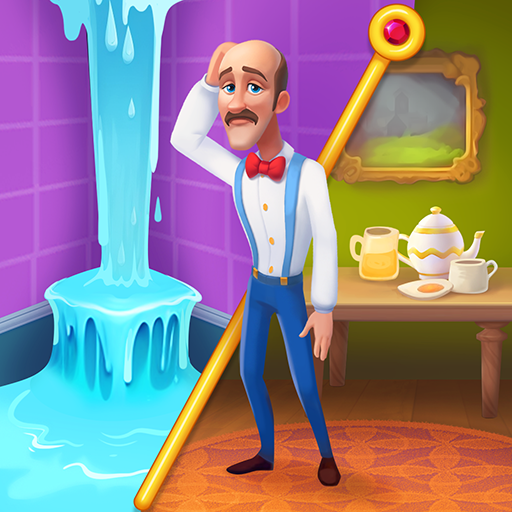
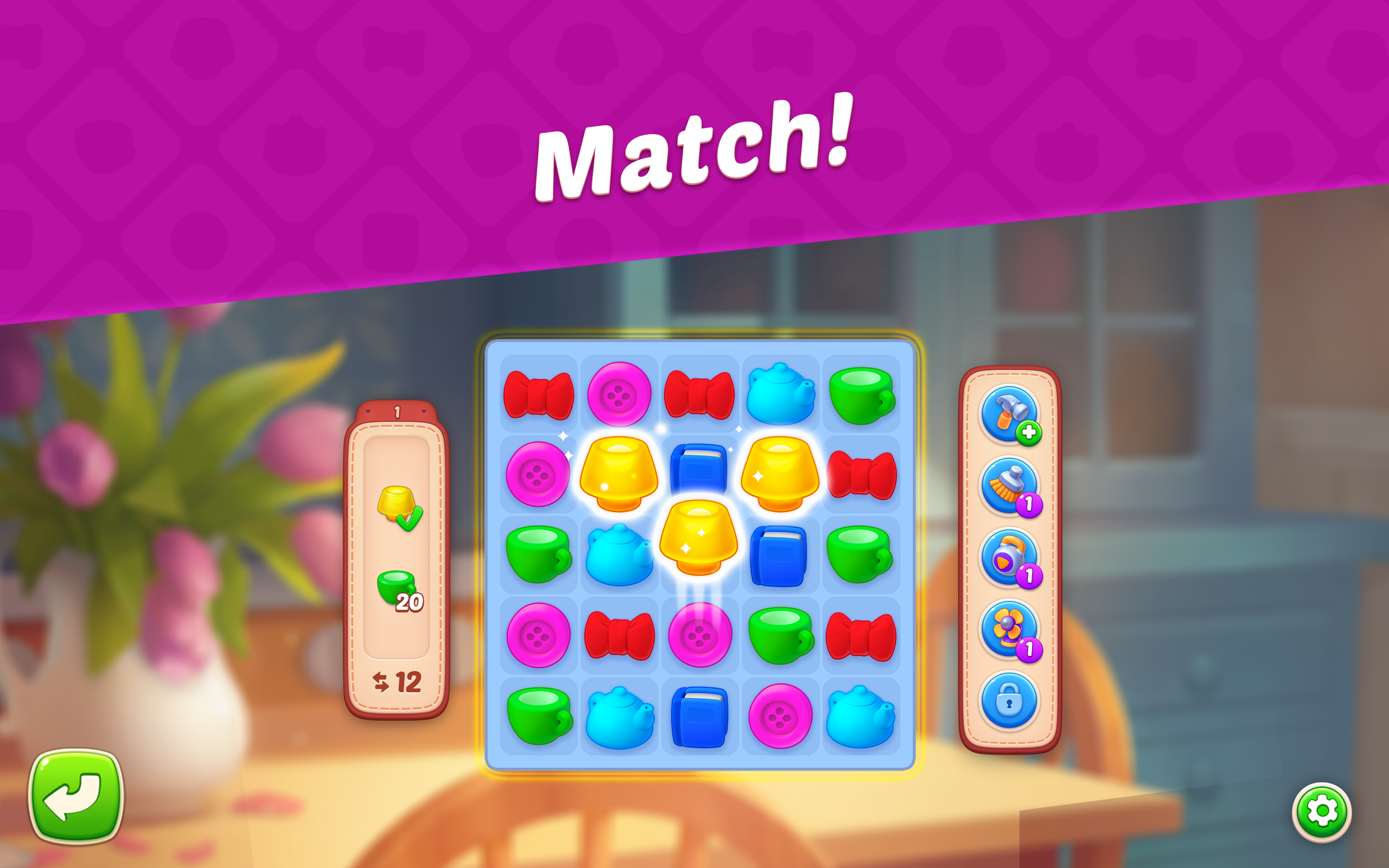
The strangest thing about Homescapes in 2026 is that the game itself is fine. The match-3 board is well-tuned, the cascades feel right, Austin the butler is a charmingly ridiculous narrator, and the renovation hook gives the puzzle progression a reason to exist beyond the next dopamine hit. Playrix knows how to build this kind of game.
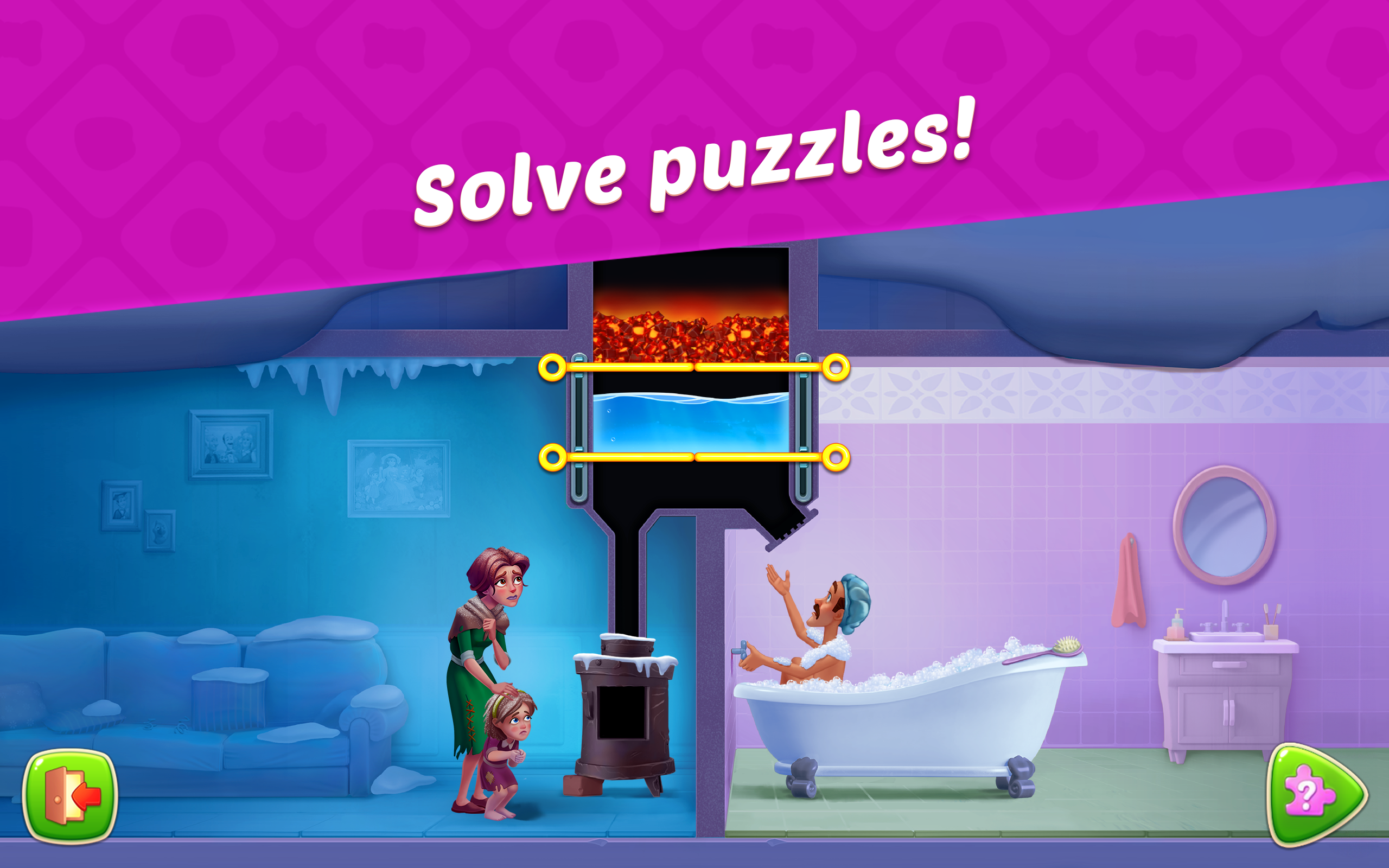
The strangest thing about Homescapes in 2026 is also that none of that is what it sells. Six years after the UK Advertising Standards Authority banned the company’s pin-pull ads as misleading, those same ads — pull-the-pin disaster-rescue puzzles, save-the-cat scenarios, drowning-character vignettes — are still the front door of every major user-acquisition campaign. Playrix conceded in regulatory proceedings that around 0.03% of players ever reach the advertised mini-game. The other 99.97% download a tile-swapper.
You can decide for yourself how to weigh a competent puzzle game against an acquisition strategy built on showing you something else entirely. The Amazon Appstore version is the same game, a step behind on patches, and free to install. Just know what you’re actually installing.
The pin-pulling puzzle in the ads exists, sort of, but Playrix has admitted barely anyone ever sees it.
FEATURES
Homescapes is a tile-swap match-3 wrapped in a home-renovation meta-game. You play Austin the butler restoring his parents' mansion. Each completed match-3 level pays out one star, and stars are spent on cosmetic renovation tasks — strip the wallpaper, choose a sofa, fix the chandelier. The renovation is purely decorative; it never feeds back into the puzzle mechanics.
The match-3 board itself uses a five-piece palette with rocket, bomb, paper-plane, and rainbow-ball power-ups that combine in predictable but satisfying chains. Many levels layer in jelly tiles, chains, and crate obstacles that force board-clearing rather than simple matching. The difficulty curve is flat for the first hundred levels and then steepens hard, with "Hard" and "Super Hard" levels designed to consume boosters.
Energy is metered through a five-life system. Fail a level and you lose a life; lives regenerate at one every thirty minutes, or you can spend gems (premium currency) to refill instantly. Boosters, extra moves, and timed events all route to the same gem economy. The pin-pulling puzzle that dominates Playrix's advertising appears as an occasional optional mini-game — Playrix itself disclosed during the UK ASA proceedings that roughly 0.03% of players ever reach it.
MISSION ACCOMPLISHED
The match-3 engine is genuinely well-tuned. Cascades feel weighty, power-up combinations are readable at a glance, and the haptics on a Fire tablet have the thump that King's Candy Crush perfected and that lesser clones still botch. Level art is consistently detailed, the renovation cutscenes have actual writing rather than placeholder dialogue, and Austin's narrative arc is sillier and warmer than it has any right to be.
Playrix is also one of the few publishers who reverted unpopular changes after backlash — the 2024 update that forced life-loss on level exits was rolled back after sustained complaint. That's worth noting in a category where the standard response to outrage is silence.
ROOM TO IMPROVE
The advertising remains indefensible. The UK Advertising Standards Authority banned Playrix's pin-pull ads in 2020, Italy's AGCM has investigated, and the ads kept running on every major platform anyway. Buying Homescapes because of a TikTok ad is buying a different game than the one you'll install. The mismatch is not a marketing flourish — it is the core acquisition strategy, and Playrix has admitted in regulatory filings that almost no player ever sees the advertised content.
The Amazon build also lags the iOS and Google Play versions on event content and patch cadence. Live events sometimes arrive a week late, and the Fire tablet UI has visible scaling issues at certain resolutions where booster icons clip the bottom safe-area. Difficulty spikes around levels 200, 400, and 800 are tuned to be effectively impossible without spending — a pattern Royal Match has largely moved away from and that increasingly defines the gap between Playrix and Dream Games.
CONCLUSION
Homescapes is a competent match-3 game saddled with a deceptive ad campaign and a monetisation curve that turns hostile around the 200-level mark. If you want the cosy renovation hook with a fairer puzzle behind it, Royal Match does the same job with less friction. If you specifically want what the ads promised, it doesn't exist anywhere in the genre at scale — pin-pull puzzles remain a marketing fiction.