Amazon / Utilities / FREE SHADOWSOCKS VPN SERVER
REVIEW
A free VPN from an unnamed developer is a trust question, not a utility.
Shadowsocks is a real protocol with a serious pedigree. This Fire-side wrapper around it asks you to take a lot on faith — no developer site, no privacy policy, no audit, no working server list anybody can verify.
BY THE APP COMRADE DESK · MAY 10, 2026 · 3 MIN READ


Free Shadowsocks vpn server
GAMESTUDIO
OUR SCORE
4.5
AMAZON
★ 5.0
PRICE
Free
Free VPN apps are the cheapest possible way to test how much trust a stranger has earned. You install one, it routes your entire device’s traffic through hardware you do not own, and you hope the operator is not selling what they see.
Shadowsocks itself is not the problem. The protocol has a serious technical lineage and is the reason a lot of people in heavily filtered networks can still read the open web. The problem is that running a Shadowsocks client only encrypts the leg between your device and an exit server somebody else operates — and the value of the whole arrangement collapses to whatever that operator’s incentives are.
This particular Fire app surfaces none of the information that would let a reasonable person assess those incentives. No company name beyond “gamestudio.” No site. No policy. No audit. The store listing is functionally blank. That is the review.
Free VPNs route your entire device through a stranger's hardware. The question is who pays for the stranger's bandwidth, and the answer is almost never charity.
FEATURES
The listing presents a Shadowsocks client wrapped for Amazon Fire. Shadowsocks itself is a real, well-regarded encrypted SOCKS5 proxy originally written in 2012 by a developer in China for users on heavily filtered networks, and it has a healthy open-source ecosystem on every major platform. This app is not that ecosystem — it's a third-party wrapper from a publisher listed as "gamestudio," with no linked website, no privacy policy surfaced in the store metadata, and no description text in the listing at all.
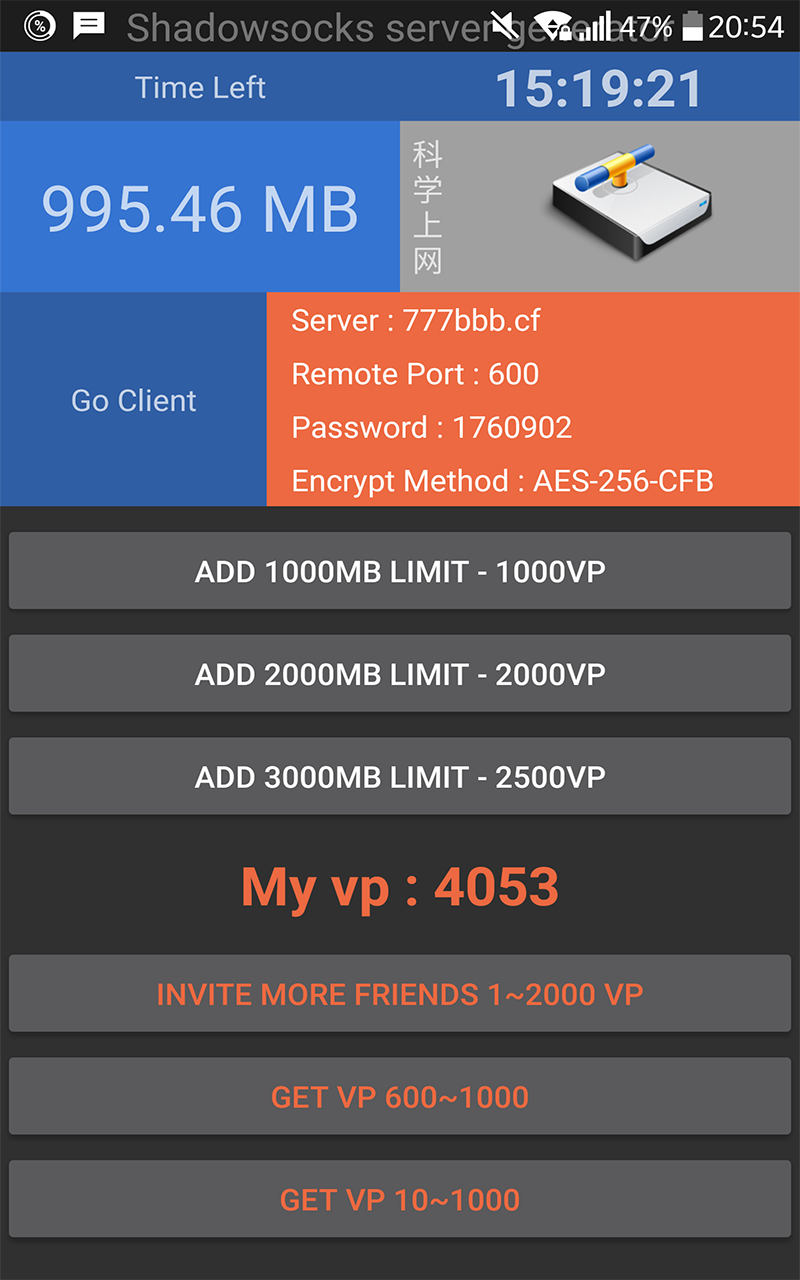
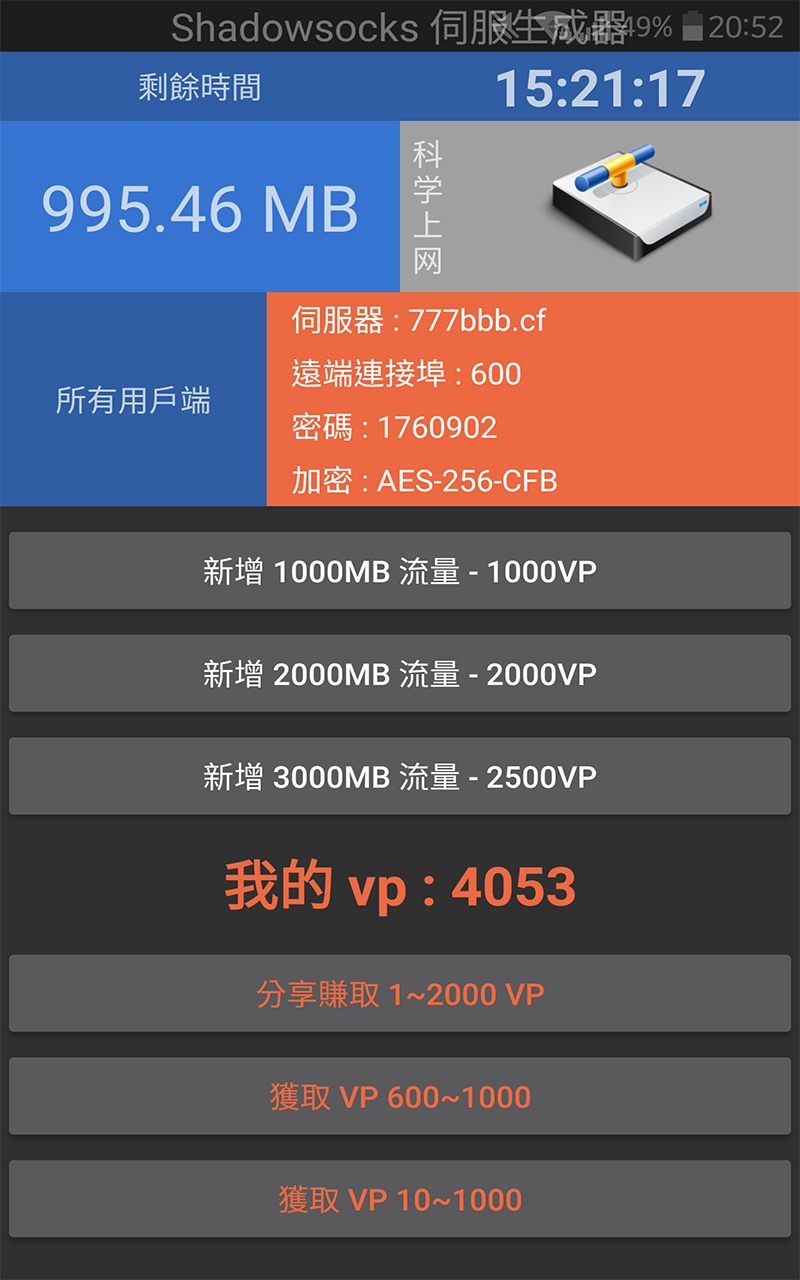
Functionally, a Shadowsocks client needs three things to be useful: a working server address, a port, and a shared password — usually distributed by the operator out-of-band. The screenshots show a server-picker UI implying the app ships with its own preconfigured server pool. That is the key detail. The user is not bringing their own server; the app is supplying it, and the operator of that server can observe every unencrypted byte exiting the tunnel.
MISSION ACCOMPLISHED
Credit where it's due: shipping a Shadowsocks client on Fire OS at all is uncommon. Most VPN apps on the Amazon Appstore are repackaged OpenVPN or WireGuard frontends pointed at the same handful of commodity backends, and Shadowsocks is genuinely better suited to the original use case of getting past stateful traffic inspection than either of those. The icon is clean. It installs and launches.
That is the entire honest list.
ROOM TO IMPROVE
Everything that matters about a VPN is missing here. No named legal entity behind the app. No jurisdiction disclosed. No privacy policy linked from the store page. No logging policy. No third-party security audit. No transparency report. No server list with locations and ownership. The "free" framing is the loudest signal of all — running VPN exit infrastructure costs real money per gigabyte, and unfunded operators recoup that cost somewhere. The documented patterns across the free-VPN category over the last decade have included ad injection into plain-HTTP traffic, resale of idle bandwidth to residential-proxy networks, harvesting of DNS queries, and outright sale of session data to data brokers. None of that is alleged here specifically — there is simply no information available to rule any of it out.
Shadowsocks the protocol does not protect you from the server operator. It encrypts the link between your device and the exit, then decrypts at the exit. Whoever runs the exit sees everything you'd otherwise show your ISP. With this app, you don't know who runs the exit.
CONCLUSION
Anyone who actually needs Shadowsocks — journalists, researchers, users behind state-level filtering — already knows to run an audited open-source client like Outline, Shadowsocks-Android, or v2rayNG, pointed at a server they rent themselves on a provider they trust. For everyone else on a Fire tablet who just wants their traffic encrypted on hotel Wi-Fi, a paid, audited consumer VPN with a published parent company is the floor. This listing meets neither bar.