Amazon / Reference / BUNEARY
REVIEW
Buneary borrows a famous name and very little else.
An unaffiliated reference app on Amazon's Appstore shares its title with a Pokémon species but offers no obvious link to the franchise, no description, and almost no surface area for a reader to evaluate.
BY THE APP COMRADE DESK · MAY 11, 2026 · 3 MIN READ


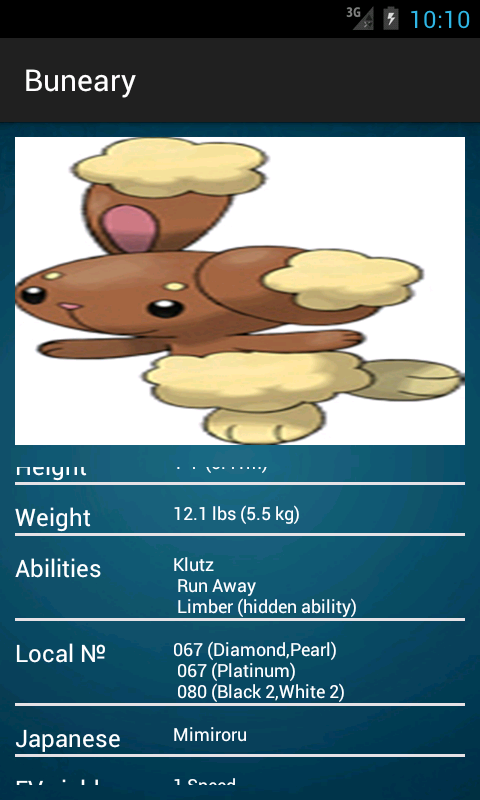
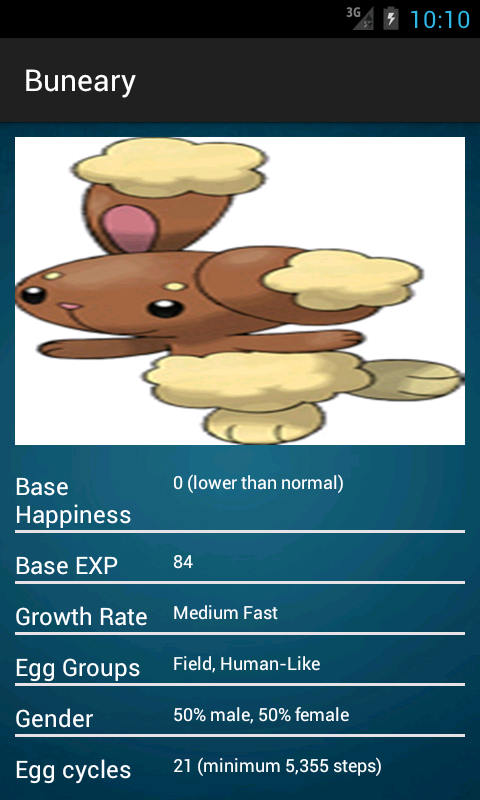
Some app listings tell you what they are. Buneary does not. Open its Amazon Appstore page in 2026 and you get a name, an icon, three screenshots, a five-star aggregate score, and a developer credit to a single first name. The description field is empty. The category is Reference. The price is zero.
The name is the part that does the work. Buneary is a Normal-type Pokémon, introduced in Generation IV’s Diamond and Pearl, and a recognizable trademark belonging to The Pokémon Company. The Amazon listing does not claim affiliation with Nintendo, Game Freak, or any official Pokémon franchise property, and the screenshots are not specific enough to confirm or deny what the app is actually for. A reader is left to assume — based on the name alone — that this is a fan-built reference tool of some kind.
That is not a review of an app. That is a review of an ambiguity, and the ambiguity is the product.
An app called Buneary on Amazon's Appstore, with no description and no developer footprint, is a question, not a product.
FEATURES
There is almost nothing to describe. Buneary's Amazon Appstore listing shows three phone screenshots, an icon, a developer credit to "Alexander," a Reference category placement, and no written description of what the app does. The price is zero. There are no in-app purchases declared. The store page carries a five-star aggregate rating, but Amazon's Appstore famously does not surface review counts for non-Google-Play titles, so a single review can drive that figure as easily as a hundred can.
What the app is supposed to be has to be inferred from the name and the icon, and the name is the part that gives any Pokémon fan pause. Buneary is the Normal-type rabbit Pokémon introduced in Generation IV — Diamond and Pearl, 2006 — and a recognizable trademark of The Pokémon Company. The Amazon listing makes no claim of affiliation with Nintendo, Game Freak, or The Pokémon Company. It also makes no claim about what the app contains.
That ambiguity is the entire user experience before installation.
MISSION ACCOMPLISHED
Genuinely difficult to identify a win here. The listing exists, the screenshots load, and the download is free, which means a curious reader can verify the app for themselves at zero cost. That is the strongest case the page makes for itself.
If the app is in fact a Pokémon reference tool — a Pokédex-style entry collector, a fan wiki shell, a sprite browser — there is a long tradition of community-built reference apps in this category, and many of them are useful. None of that can be confirmed from the listing alone.
ROOM TO IMPROVE
The missing description is the single biggest problem. Amazon's Appstore lets developers write hundreds of words explaining what an app does, who it is for, and what platforms or data it draws on. Leaving that field blank in 2026 is not a stylistic choice — it reads as either an abandoned listing or a deliberate decision to let the title do the marketing. Neither inspires trust.
The name itself is the second problem. Using a trademarked Pokémon species name for an unaffiliated reference app sits in a legal grey zone that historically gets cleaned up by platform takedowns rather than by lawsuits — but the app is still live, which suggests either tacit tolerance or low enough traffic to escape notice. Readers downloading this should not assume any official relationship with The Pokémon Company.
CONCLUSION
Skip until the developer fills in the description and clarifies what the app actually does. The cost of installing a Reference app with no documented behavior is low in dollars and high in friction; there is no obvious reason to spend either. A reader looking for a Pokédex on Fire tablets is better served by the official Pokémon HOME app on iOS and Android or by community wikis in a browser tab.